
Home Services Wall removals and RSJ beamsFull house renovationsGarage conversionsChimney breast removalBuildersKitchen fittingFitted wardrobesMedia wallsAlcove shelving and joineryWall panellingSkirting, architrave and covingInternal doorsFire doorsSecond-fix carpentryStaircases and balustradeLoft boardingFencing and gatesOak porches Projects Door packages Advice CardiffBridgendCowbridgePorthcawlPencoedPontyclunLlanharanLlantrisant About Request a Free Quote 07940 072166

Home/Advice/Wall removals

Wall removals

What makes one wall removal cost more than another

The things that actually move the price of a knock-through, so you can tell why two quotes for the same room are miles apart.
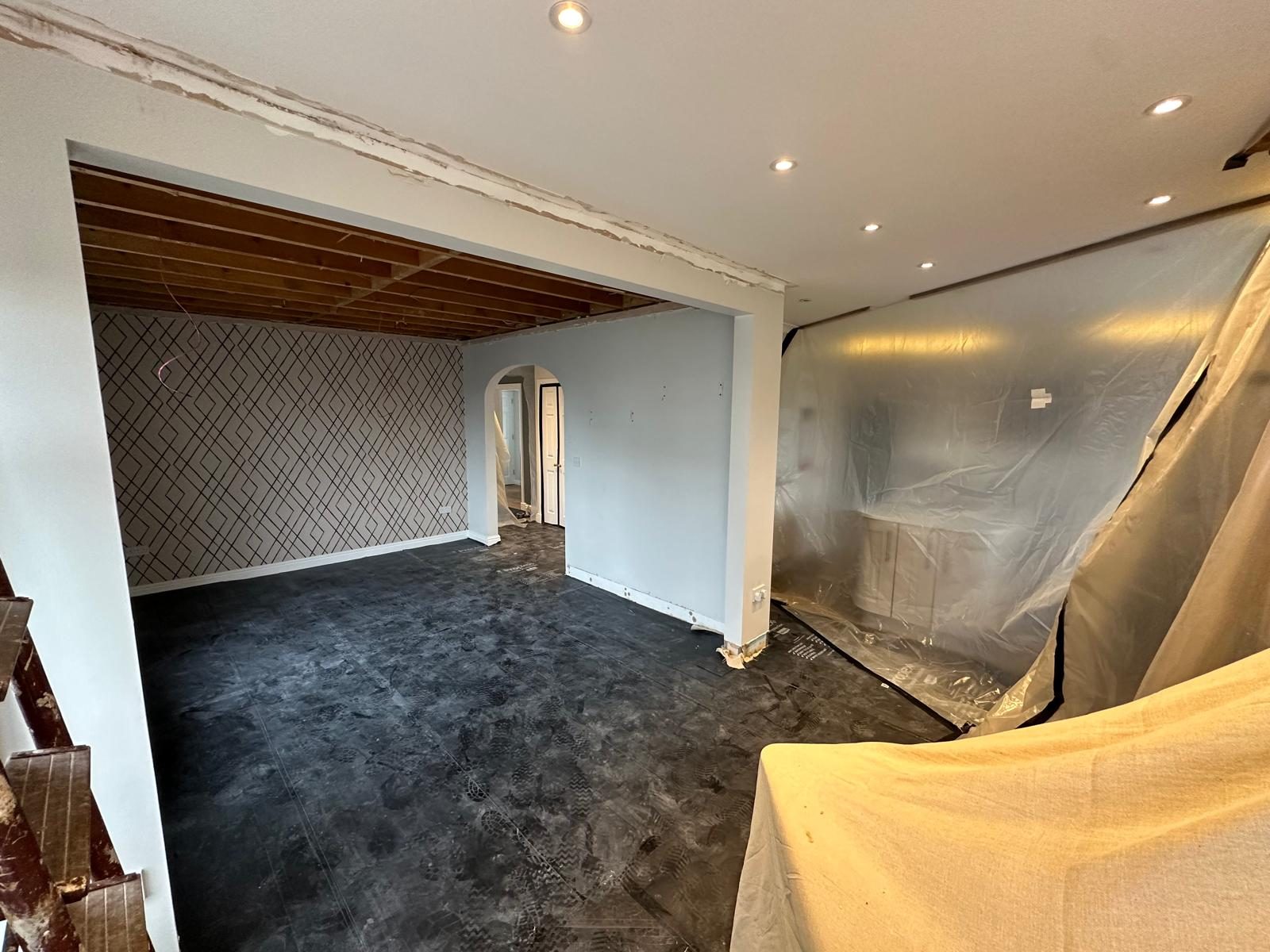
What makes one wall removal cost more than another

Six things move the price of a wall removal: how far the steel has to span, how much is sitting on it, whether anything structural is going on above, what services are buried in the wall, how the beam gets into the house, and how much patching up you want at the end. Two quotes for the same room can differ honestly by thousands because the people quoting have made different assumptions about those six. The useful question is not "how much" but "what have you assumed".

Nobody can price this properly off a photograph, and anybody who does is guessing. What a photograph can do is tell you which of the six apply to you, which is why sending one is worth the two minutes.

How much does the span change things?

More than anything else. A beam does not get a bit heavier as it gets longer, it gets heavier quickly, and heavier steel means more men, sometimes mechanical lifting, bigger solid supports and more support underneath. The jump between a wide doorway and a full wall out is not proportional, and that is the single most common reason two quotes look unrelated.

What does "what is sitting on it" mean?

A wall taking only the ceiling joists of the room above is a different job to one taking a floor, a wall above, and a roof. In a two storey terrace the wall between the front and back room is often carrying all three. The engineer works out the load before anybody can size the steel, which is why the calculations come first and the ordering comes after.

Why do buried services matter so much?

Because they are somebody else's trade and somebody else's certificate. Sockets, switches and any cable in that wall are electrical work. A radiator, a pipe run or a boiler on that wall is heating work. None of it is difficult, but each one adds a visit from a different trade and a sequence everyone has to work around, so it stretches the job as well as adding to it.

This is also where surprises live. Nobody can see inside the wall until it opens, and an old house that has been altered twice before rarely matches what you would expect.

Does access really change the figure?

It does, and people are always surprised by it. A steel beam for a domestic opening is long, heavy and does not bend. If it comes through the front door, round a staircase and into a back room, that is a different proposition to one that goes in through patio doors. Terraces with no side access, first floor work, and anything where a window has to come out to get the steel in all cost more for reasons that have nothing to do with the structure.

What counts as patching up?

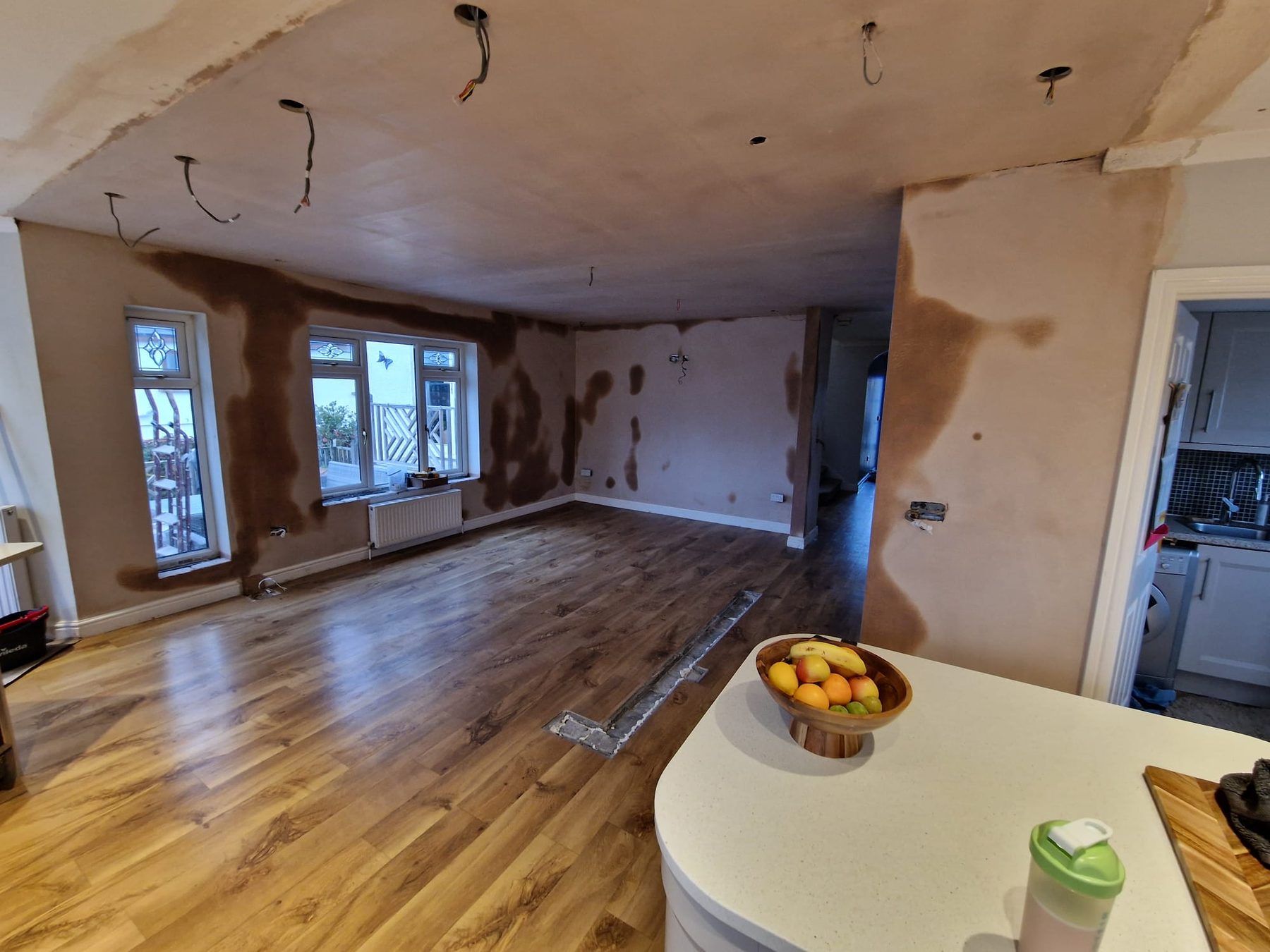
Everything between "the opening is formed" and "the room is finished". Boxing the beam in, plastering, squaring the reveals, the floor where the wall sat, the skirting running through, and the ceiling line where two rooms that were never meant to meet now do. It is a large part of what you actually see, and it is the part most often left vague in a quote. Ask explicitly whether plastering, flooring and decorating are in or out.

What about building control and the engineer?

Both are real costs and both are separate from the builder. The structural engineer produces the calculations, and the council charges for the building control application and the inspections. Some builders include them in a single figure and some list them separately, which on its own can make two quotes look very different when they are not. Ask which way round it is before you compare anything.

So what should you actually ask for?

  • Whether the engineer and building control fees are inside the figure or outside it
  • What has been assumed about the electrics and the heating in that wall
  • How the beam is getting into the house
  • Where patching up stops: plaster, floor, skirting, decoration
  • What happens to the price if the wall turns out to be carrying more than expected

A quote that answers those five is a quote you can compare. One that is a number in a text message is not, however good the number looks. There is more on that in how to read a builder’s quote.
Common questions

How much does the span change things?
More than anything else. A beam does not get a bit heavier as it gets longer, it gets heavier quickly, and heavier steel means more men, sometimes mechanical lifting, bigger solid supports and more support underneath. The jump between a wide doorway and a full wall out is not proportional, and that is the single most common reason two quotes look unrelated.
What does "what is sitting on it" mean?
A wall taking only the ceiling joists of the room above is a different job to one taking a floor, a wall above, and a roof. In a two storey terrace the wall between the front and back room is often carrying all three. The engineer works out the load before anybody can size the steel, which is why the calculations come first and the ordering comes after.
Why do buried services matter so much?
Because they are somebody else's trade and somebody else's certificate. Sockets, switches and any cable in that wall are electrical work. A radiator, a pipe run or a boiler on that wall is heating work. None of it is difficult, but each one adds a visit from a different trade and a sequence everyone has to work around, so it stretches the job as well as adding to it. This is also where surprises live. Nobody can see inside the wall until it opens, and an old house that has been altered twice before rarely matches what you would expect.
Does access really change the figure?
It does, and people are always surprised by it. A steel beam for a domestic opening is long, heavy and does not bend. If it comes through the front door, round a staircase and into a back room, that is a different proposition to one that goes in through patio doors. Terraces with no side access, first floor work, and anything where a window has to come out to get the steel in all cost more for reasons that have nothing to do with the structure.
What counts as patching up?
Everything between "the opening is formed" and "the room is finished". Boxing the beam in, plastering, squaring the reveals, the floor where the wall sat, the skirting running through, and the ceiling line where two rooms that were never meant to meet now do. It is a large part of what you actually see, and it is the part most often left vague in a quote. Ask explicitly whether plastering, flooring and decorating are in or out.
What about building control and the engineer?
Both are real costs and both are separate from the builder. The structural engineer produces the calculations, and the council charges for the building control application and the inspections. Some builders include them in a single figure and some list them separately, which on its own can make two quotes look very different when they are not. Ask which way round it is before you compare anything.
So what should you actually ask for?
A quote that answers those five is a quote you can compare. One that is a number in a text message is not, however good the number looks. There is more on that in how to read a builder’s quote .
A renovation part way through
Get started

Let’s Bring Your Project to Life.

Considering a home renovation, structural alteration or bespoke carpentry project? We’d love to hear your ideas. Get in touch to discuss your requirements and arrange a free, no-obligation quotation.

Call