
Home Services Wall removals and RSJ beamsFull house renovationsGarage conversionsChimney breast removalBuildersKitchen fittingFitted wardrobesMedia wallsAlcove shelving and joineryWall panellingSkirting, architrave and covingInternal doorsFire doorsSecond-fix carpentryStaircases and balustradeLoft boardingFencing and gatesOak porches Projects Door packages Advice CardiffBridgendCowbridgePorthcawlPencoedPontyclunLlanharanLlantrisant About Request a Free Quote 07940 072166

Home/Advice/Mouldings

Mouldings

Is this acceptable? What good skirting, architrave and panelling looks like

How to judge a joinery finish without being a joiner, what is a genuine fault, and what is just how timber behaves.
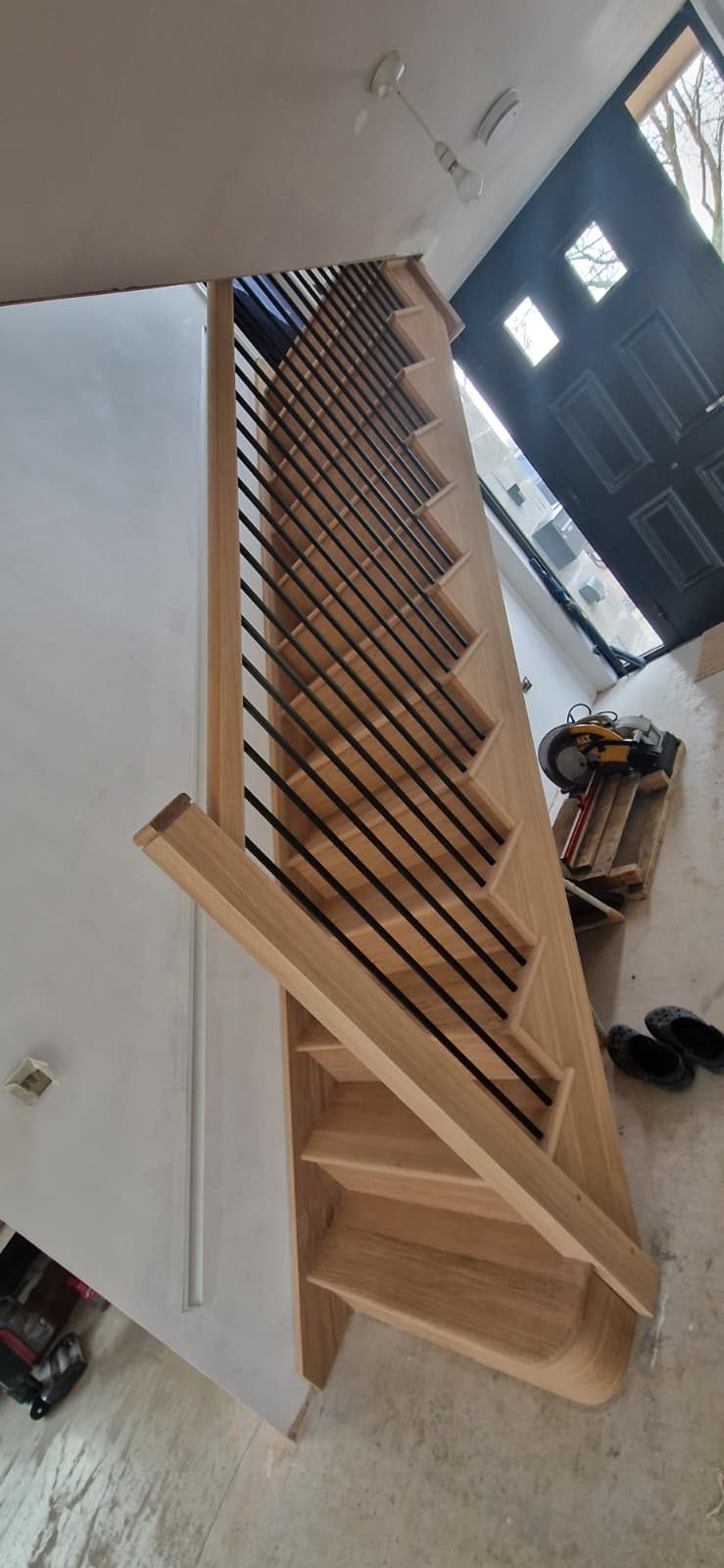
Is this acceptable? What good skirting, architrave and panelling looks like

Judge joinery on four things: whether the joints are tight and in the right place, whether the lines are level and consistent along their length, whether gaps against walls and floors have been dealt with rather than left, and whether the filling and caulking has been done before paint, not in place of it. A small amount of movement and the odd filled pin hole are normal. Open mitres, a skirting that waves along the wall, and caulk used to hide a bad cut are not.

Homeowners ask this constantly and are usually told they are being fussy. Mostly they are not. They just have not been told what to look at.

What should I look at first?

The joints, at eye level and then from an angle. An external corner on skirting or architrave should be a closed mitre with the faces meeting in a crisp line. Internal corners on skirting are usually scribed, not mitred, because a scribed joint stays shut when the timber moves and a mitre opens. Seeing neat scribes internally is a good sign about everything else.

Are gaps always a fault?

No. Walls are not flat and floors are not level, so some gap is inevitable and the question is whether it has been handled. A consistent small gap at the bottom of a skirting that will be covered by flooring is fine. A tapering gap along the top of a skirting, where it is obvious the board is straight and the wall is not, should have been scribed or caulked. A finger-width hole at a corner is a fault whatever anybody tells you.

How much filler and caulk is acceptable?

Filler on pin holes and caulk along the top edge of skirting and round architrave is standard practice and always has been. What is not acceptable is caulk used as a substitute for cutting properly: a bead so thick it has its own shadow, filling a mitre that was cut short, or caulk smeared across a face instead of run into a joint. The test is simple: is it finishing the work, or hiding it?

What about panelling specifically?

Look at the set-out before you look at the joints. The panels should be even across the wall and should relate sensibly to the room: centred on the chimney breast, balanced either side of a window, and not leaving a sliver at one end. Getting that right is the whole job and it happens before anything is cut, which is why marking up matters more than the mitres do. Rails should be level along their length, and the horizontals should line through from one wall to the next where they turn a corner.

Is it a problem if the timber has moved?

Not on its own. Timber and MDF both move with the heating going on, and a hairline opening at a joint a few months later is normal and caulks out. Oak does something more dramatic: green oak dries and splits along the grain, which are called shakes. On a green oak porch they are expected rather than a fault. What is not normal movement is a joint that has opened wide enough to see through, or a board that has visibly bowed off the wall.

What if I am not happy with it?

Say so early, politely and specifically, with photographs. "The mitres on the architrave in the back bedroom are open" is actionable. "I am not happy with the finish" is not, and tends to go nowhere. Most of this is fixable in an hour by the person who did it, and far harder to fix once everything has been painted and they have moved on to another job.
What should I agree before anybody starts?

  • Whether mouldings arrive primed or finished, and who is painting them
  • Whether the old skirting is coming off, and what happens to the paint line behind it
  • Whether flooring goes down before or after, because it changes the finished heights
  • Who is filling, caulking and patching up, and whether that is in the price

Common questions

What should I look at first?
The joints, at eye level and then from an angle. An external corner on skirting or architrave should be a closed mitre with the faces meeting in a crisp line. Internal corners on skirting are usually scribed, not mitred, because a scribed joint stays shut when the timber moves and a mitre opens. Seeing neat scribes internally is a good sign about everything else.
Are gaps always a fault?
No. Walls are not flat and floors are not level, so some gap is inevitable and the question is whether it has been handled. A consistent small gap at the bottom of a skirting that will be covered by flooring is fine. A tapering gap along the top of a skirting, where it is obvious the board is straight and the wall is not, should have been scribed or caulked. A finger-width hole at a corner is a fault whatever anybody tells you.
How much filler and caulk is acceptable?
Filler on pin holes and caulk along the top edge of skirting and round architrave is standard practice and always has been. What is not acceptable is caulk used as a substitute for cutting properly: a bead so thick it has its own shadow, filling a mitre that was cut short, or caulk smeared across a face instead of run into a joint. The test is simple: is it finishing the work, or hiding it?
What about panelling specifically?
Look at the set-out before you look at the joints. The panels should be even across the wall and should relate sensibly to the room: centred on the chimney breast, balanced either side of a window, and not leaving a sliver at one end. Getting that right is the whole job and it happens before anything is cut, which is why marking up matters more than the mitres do. Rails should be level along their length, and the horizontals should line through from one wall to the next where they turn a corner.
Is it a problem if the timber has moved?
Not on its own. Timber and MDF both move with the heating going on, and a hairline opening at a joint a few months later is normal and caulks out. Oak does something more dramatic: green oak dries and splits along the grain, which are called shakes. On a green oak porch they are expected rather than a fault. What is not normal movement is a joint that has opened wide enough to see through, or a board that has visibly bowed off the wall.
What if I am not happy with it?
Say so early, politely and specifically, with photographs. "The mitres on the architrave in the back bedroom are open" is actionable. "I am not happy with the finish" is not, and tends to go nowhere. Most of this is fixable in an hour by the person who did it, and far harder to fix once everything has been painted and they have moved on to another job.
A renovation part way through
Get started

Let’s Bring Your Project to Life.

Considering a home renovation, structural alteration or bespoke carpentry project? We’d love to hear your ideas. Get in touch to discuss your requirements and arrange a free, no-obligation quotation.

Call