
Carpentry and building
Staircases and balustrade
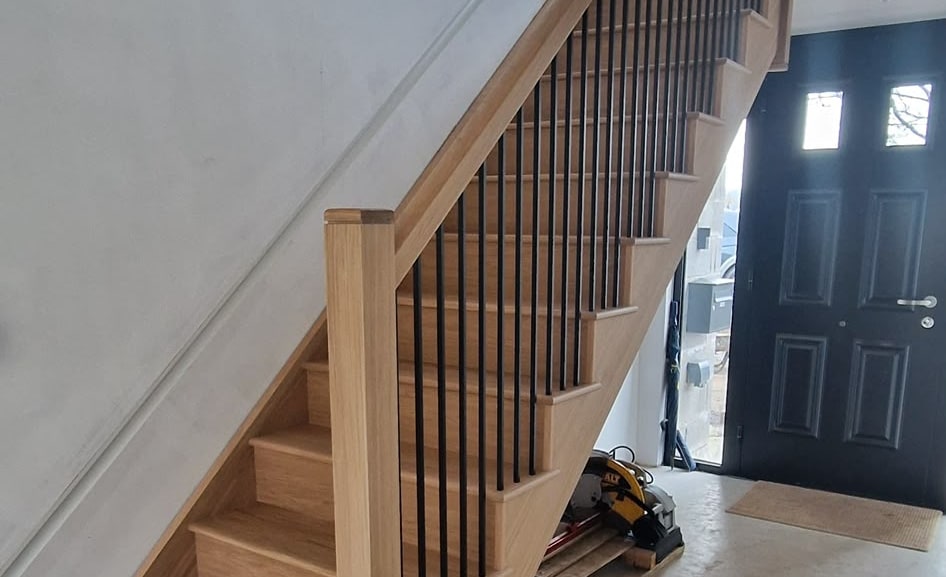
New flights, or the existing one re-clad in oak with new spindles. Handrails, newels and balustrade built to the regulations.
Common questions
Can you just re-clad my existing stairs?
If the flight is sound and staying where it is, yes. Oak treads and risers go over the existing structure, with new newels, handrail and spindles. It is quicker and cheaper than a rebuild and the finished result is the same.
How much disruption is it?
The stairs are out of use for part of the day, which matters a great deal more in a house with only one flight. We work so you can get up and down at the end of each day, and if there is a stretch where you cannot, you will know about it beforehand.
Are metal or glass spindles more expensive?
Metal spindles usually come in close to timber. Glass panels cost more and need the right fixings. All three have to meet the same 100mm sphere rule, so it is a decision about how you want it to look rather than about safety.
Do stairs have to meet building regulations?
A new flight does. Approved Document K sets the pitch, the rise and going, the handrail height and the balustrade. Re-cladding an existing flight does not usually trigger it, but we will tell you plainly where your stairs currently stand.
What about the carpet or flooring?
It changes the finished height of the top and bottom step, so it has to be decided before we cut. If the flooring is going down after us, tell us the thickness at the measure-up.
Worth reading
Worth reading
The questions people ask before booking a visit.

Wardrobes
Fitted wardrobes or freestanding: what you actually gain
Fitted costs more than a flat-pack. Here is what the money buys, and when freestanding is genuinely the better call.

Wardrobes
Why wardrobe doors do not line up, and what scribing is
Walls bow, floors fall away and ceilings drop. Scribing is how a square carcass ends up looking like it grew there.