Carpentry and building
Fencing and gates
Panels, close board, posts and gates. Replacing a line that has come down, or setting out a new one.

Common questions
Whose fence is it?
Check your deeds if you are not certain. As a rule of thumb the posts sit on the owner’s side, but that is a convention rather than a law. It is worth settling before anyone puts a post in the ground.
Timber or concrete posts?
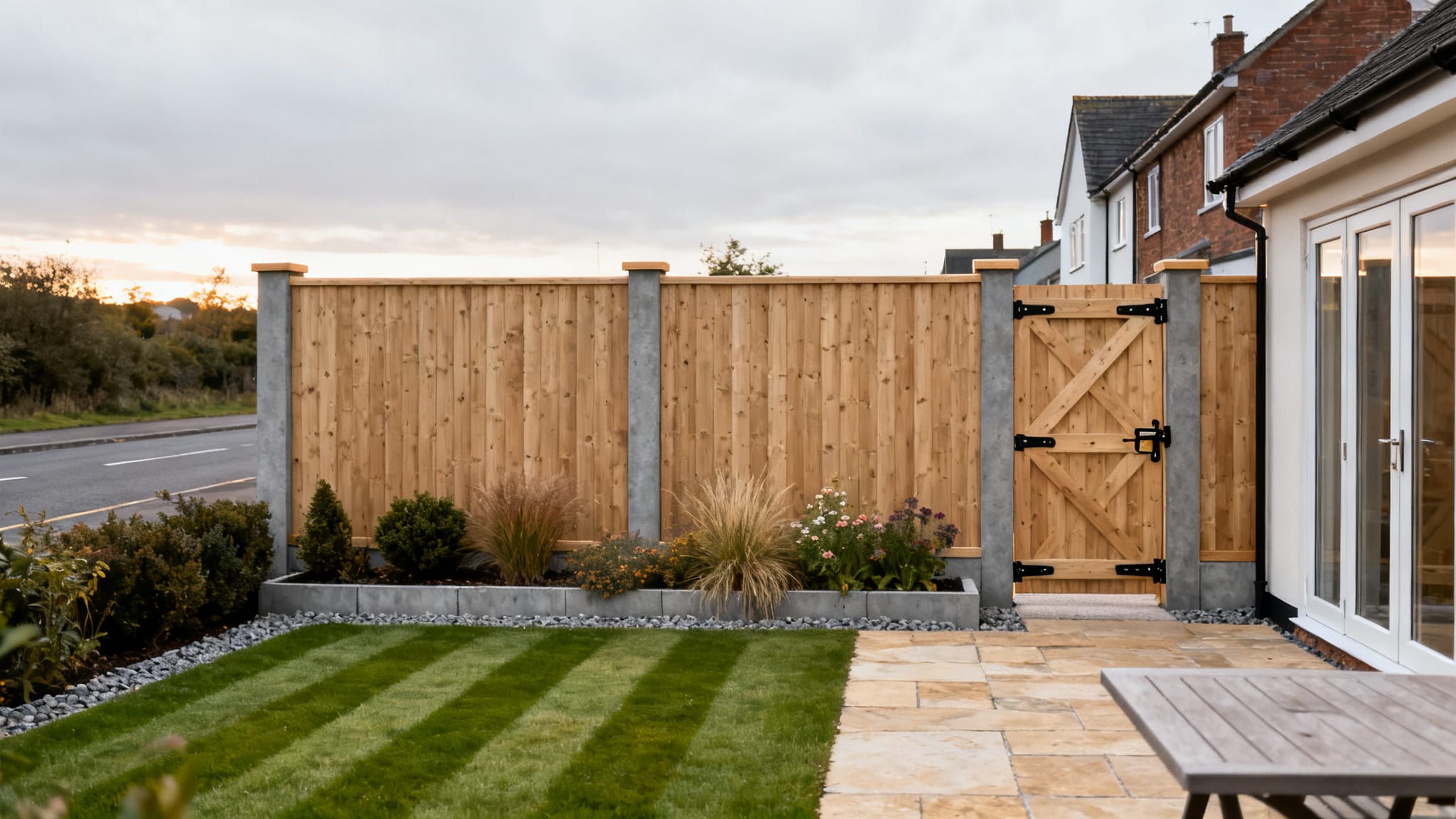
Concrete posts and gravel boards cost more on the day and last considerably longer, because posts rot at ground level and take the panel down with them. On an exposed or wet run it is usually the cheaper decision over ten years.
Do you take the old fence away?
Yes, and it gets priced in. Old fencing is bulky, so disposal is worth agreeing up front.
Can you follow a slope?
Yes. Panels can be stepped down the fall, or a close board run can be raked to follow it. Stepping is cheaper, raking looks better on a steep run, and we will show you both at the measure-up.
Do I need permission?
Usually not for a fence under two metres, or under one metre where it faces a highway. Listed buildings and conservation areas are different, and so are some estates with covenants. If either applies to you, check with the council first.
Worth reading
Worth reading
The questions people ask before booking a visit.

Wardrobes
Fitted wardrobes or freestanding: what you actually gain
Fitted costs more than a flat-pack. Here is what the money buys, and when freestanding is genuinely the better call.

Wardrobes
Why wardrobe doors do not line up, and what scribing is
Walls bow, floors fall away and ceilings drop. Scribing is how a square carcass ends up looking like it grew there.