Dado, full height or shaker grid: which panelling suits which room
Three common panelling styles, what each one does to a room, and where each one goes wrong.
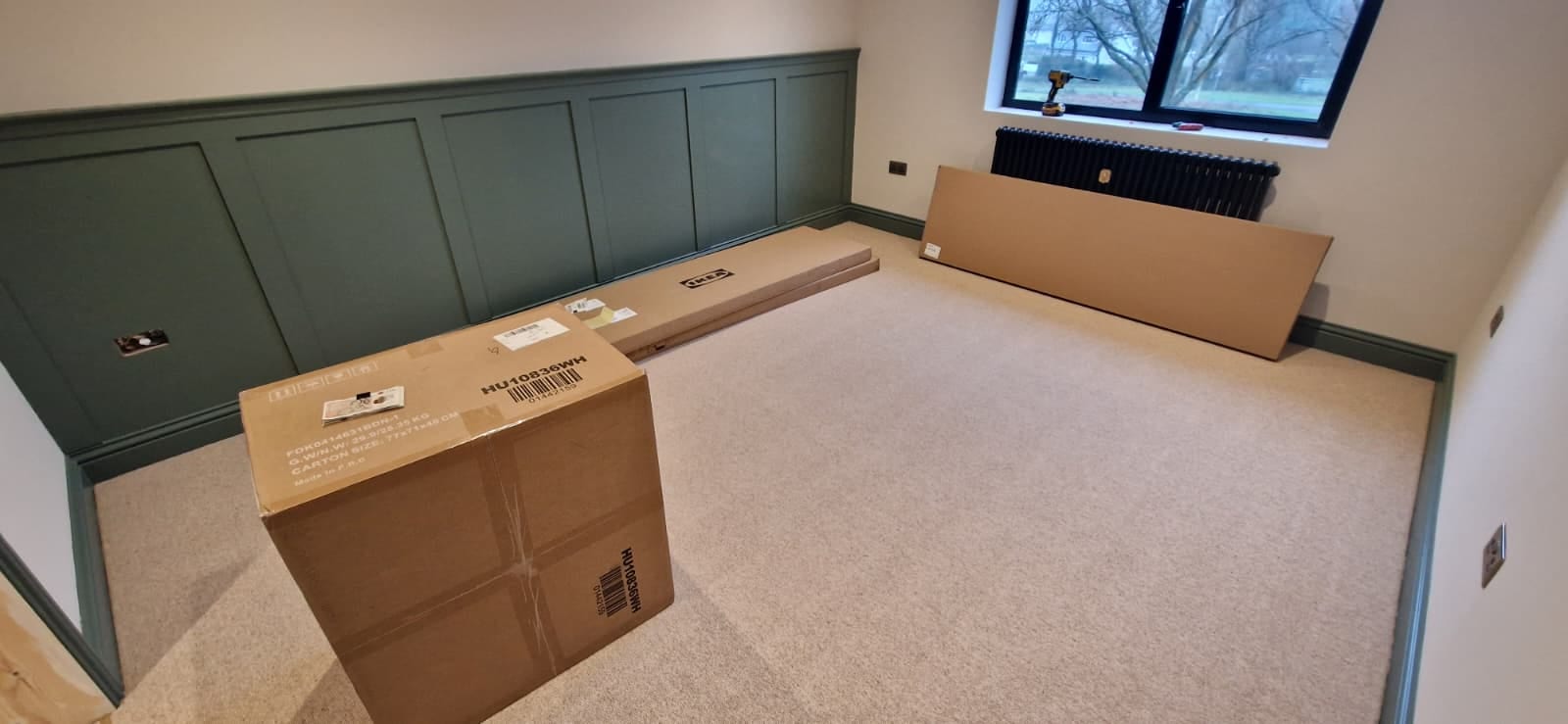
Dado panelling stops around 1000mm off the floor and suits hallways, stairs and dining rooms. Full height runs floor to ceiling and works on one feature wall. A shaker grid is square framing across the whole wall and needs a ceiling above about 2.4m to read properly. In the older Cowbridge and Bridgend houses we work in, ceiling height decides this more often than taste does.
People usually arrive with a photograph rather than a style name. This is roughly what those photographs are.
Where does dado height panelling work best?
One row of panels from the skirting to about a metre up, finished with a rail. It is the safest option and the most forgiving of an uneven wall, because only the bottom third is panelled. It suits hallways and stairs particularly well, where the wall takes knocks anyway.
Where it goes wrong: in a room with a ceiling much under two and a half metres, a heavy dado rail cuts the wall in half and makes the room feel shorter.
When is full height panelling the right choice?
Panels from skirting to cornice. Dramatic in a tall room, and it makes a plain box of a room feel considered. It is more work, less forgiving, and it wants the ceiling line to be reasonably straight.
Which rooms suit a shaker grid?
Square or near-square panels in a repeating grid, usually full height. Currently the most requested and the least forgiving, because the eye reads a grid instantly and any drift shows. This is the one where setting out earns its money.
What finish should panelling have?
All three are normally MDF, filled, caulked and painted rather than timber. Painted one colour with the wall above is the current look and it makes a small room feel bigger. Painted a contrast to the wall reads more traditional.
Keep reading
More from the site
The questions people ask before booking a visit.

